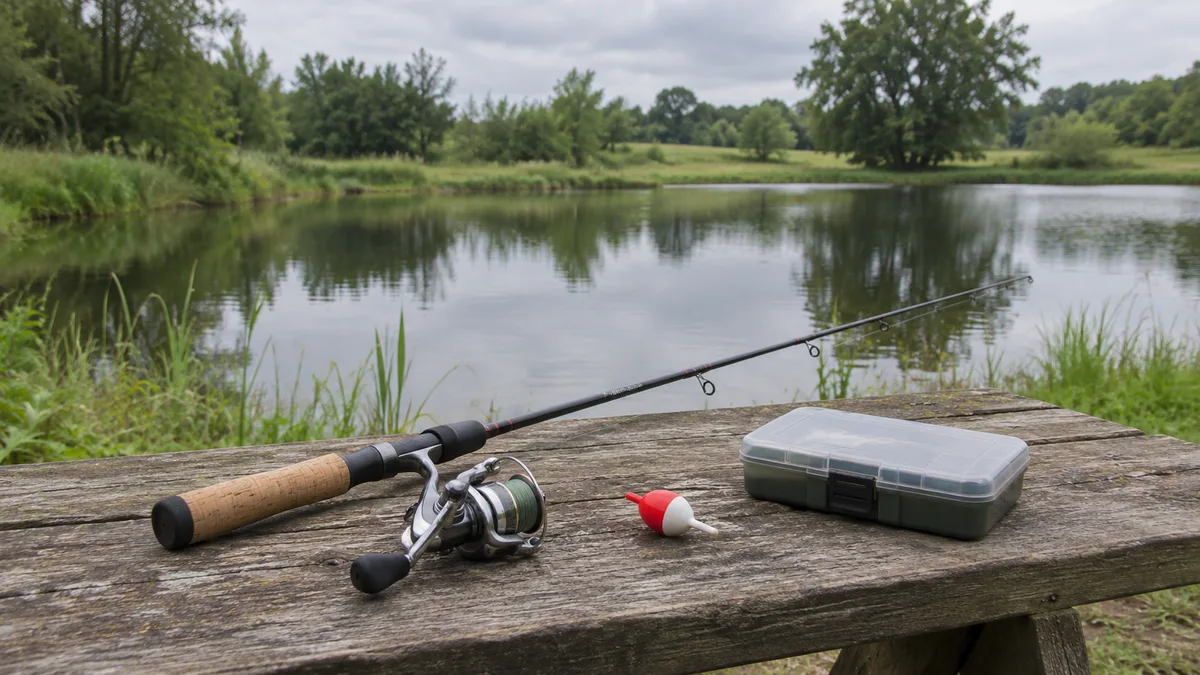
A float and a small baited hook are a practical starting point for stocked trout in a pond, where bait is permitted. A small spinner or spoon is another option when artificial lures are allowed. Before rigging either, check the rules for the particular water: bait, hook types, sinker materials, seasons and harvest limits can differ between ponds.
Use the stocking finder to locate a reported or planned stocking, then check the linked agency and land manager for current rules and access. A stocking report is not a promise that fish are still present or biting.
Start with a small tackle kit
A light spinning or spincast outfit, a few hooks, a float, small non-lead split shot and one or two small lures are enough for a first trip. Oregon’s fisheries agency suggests a light rod and reel with 4–6-pound monofilament as one starting combination. Choose gear you can cast safely and handle comfortably; it does not need to match an exact shopping list.
Keep hooks covered while carrying tackle and check behind you before every cast. Leave space between anglers, and supervise children around hooks and water. See our family pond guide for choosing a suitable bank and planning breaks.
Rig 1: bait under a float or bobber
Where bait is legal, a float, also called a bobber, suspends the hook above weeds or the bottom and makes a bite easier to see. This bobber rig is a useful starting setup for a beginner fishing a pond or small lake. Oregon’s trout guide describes a simple setup:
- Tie a suitable bait hook securely to the end of the line.
- Attach a small split shot above the hook, following the tackle manufacturer’s instructions. Use a legal, non-lead weight where available.
- Clip a float roughly 1½ to 3 feet above the hook as a starting depth. Adjust to keep the hook above vegetation and underwater obstructions.
- Add a small piece of permitted bait. Cast into clear water, close the reel and watch the float.
If the float dips or moves unnaturally, take up slack and lift the rod gently. Retrieve and recast if wind carries the rig toward another line. Fish can be at different depths, so a starting depth is a suggestion, not a guarantee.
Rig 2: a floating-bait bottom rig
When bait is allowed and trout are deeper, a weighted line can hold floating bait above the pond bottom. Unlike a bobber rig, this bottom rig rests its weight on the bottom and presents the floating bait above it. Oregon describes placing the weight about 1½ feet above the baited hook. After casting, let the weight settle and watch the line or rod tip for a bite.
This setup depends on the bait floating. Test it in shallow water before casting; an ordinary worm may not float on its own. Avoid bottom fishing where the rig would become snagged, and check the pond’s bait and hook rules first. Stay with your rod and follow local rules on attended lines and the number of rods allowed.
Rig 3: a small spinner or spoon lure
Tie an allowed small lure to the line, cast into open water and retrieve it steadily. Try a different retrieve speed or allow the lure to sink briefly before reeling, while keeping clear of weeds and snags. Oregon’s trout guide recommends varying depth and retrieve speed to find what works. A lure is not inherently legal everywhere: some waters limit hook style, number of hooks or lure type.
Never cast toward swimmers, wildlife or another angler. If the bank is crowded, a short, controlled cast may be more useful than trying to reach the center of the pond.
If you plan to release a trout
Check whether the water requires release and whether bait is permitted. Fish caught on bait can swallow a hook deeply, so choose a locally permitted method appropriate to your intended harvest or release. Handle a fish with wet hands, keep it in the water as much as possible and avoid touching its gills. Follow the local agency’s current release guidance and any special rules. If you intend to keep a legal fish, observe the limits and keep it cool.
Pack out line, bait containers and other litter. Clean and dry gear according to agency guidance before moving to another water. Our beginner’s guide covers licenses, access and planning a first trip.
Common questions
How deep should a trout float be?
Oregon suggests starting roughly 1½ to 3 feet above the hook. Adjust for water depth, weeds and local conditions; there is no single depth that works in every pond.
Is a recent stocking the same as a scheduled stocking?
No. A schedule describes a plan, while a completed report describes what the agency says occurred. See scheduled versus completed stockings before interpreting a date.
Can I use a worm at every stocked pond?
No. Some waters restrict natural bait or allow only artificial lures. Check the regulations for the specific pond and date before fishing.
Sources & further reading
- Oregon Department of Fish and Wildlife: How to fish for trout ↗
- Oregon Department of Fish and Wildlife: Gearing up for fishing ↗
- Oregon Department of Fish and Wildlife: Learn to fish ↗
- U.S. Fish and Wildlife Service: A guide to fishing for the first time ↗
Agency information can change. Check the official page before travelling. Suggest a correction.