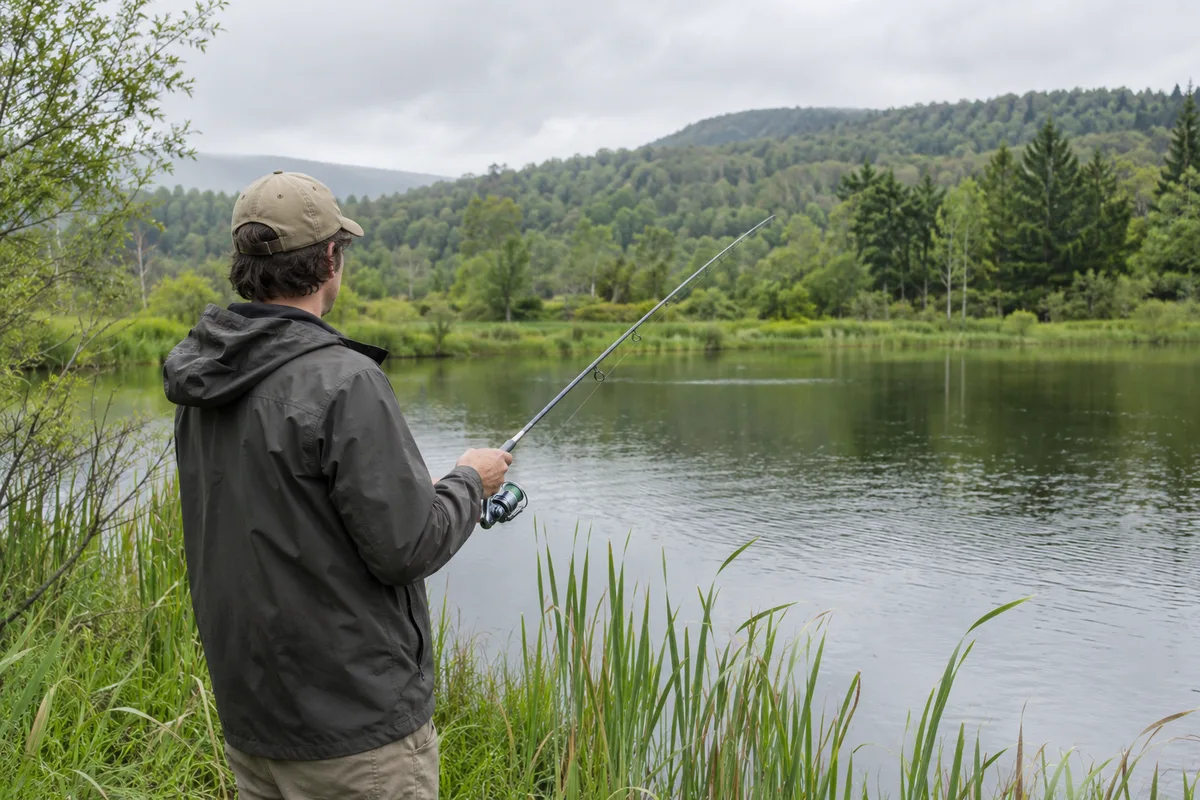
A stocked pond or stream can be a welcoming place to try trout fishing. Start with a water you can reach safely, check the current rules and bring a simple rod and a small selection of permitted tackle. A stocking report can help you choose where to go, but it cannot guarantee a catch or tell you exactly where fish will be when you arrive.
Choose a water and check the report
Use the stocking finder or state directory to find a pond, lake or stream, then open the agency source linked to the record. Check the full water name, locality and season. Similar names can refer to different ponds or stream sections.
Read the date label carefully. A planned stocking may change, a stocking-week window is not an exact day, and a report date may describe when the agency posted an update. A recently reported release is useful information, not proof that fish are still concentrated at the access point. Our guide to schedules and reports explains the difference.
For a first outing, a public pond with a manageable bank and clear access information may be easier to explore than a fast stream. Confirm the actual access point and parking with the managing agency; a stocking entry alone does not establish public access everywhere along the water.
Check the rules before choosing bait
Read the current regulations for the specific water and date. Depending on the location, you may need a fishing license or trout permit, and there may be a season, size or harvest limit, gear restrictions, or a catch-and-release period. Rules for children and local permits vary.
Do not assume worms, scented bait, treble hooks or a particular lure are allowed. Some designated waters restrict bait or require artificial lures or particular hooks. Choose your setup only after you know what the water permits, and check for temporary closures or access notices before leaving.
Bring a simple trout fishing setup
You do not need a specialized fly-fishing outfit to get started. Oregon’s fish and wildlife agency suggests a lightweight spinning or spincast rod and reel, light fishing line, and a small selection of hooks, floats, weights and lures as a starting point. Match the equipment to your skills and local rules.
For a concrete starting point, Oregon lists a lightweight rod with 4- to 6-pound-test monofilament line, size 8 bait hooks and small spinners. These are examples for a general trout setup, not mandatory sizes for every fishery. Ask a local tackle shop or the managing agency what fits your water and any hook or gear restrictions.
A practical first-trip kit can include:
- A light rod and reel with line appropriate to the water.
- A small float, suitable hooks and a few small weights for a permitted bait presentation, or a small spinner or spoon where lures are allowed.
- Pliers or a hook-removal tool and a rubber or soft knotless landing net if you may release a fish.
- Your license and any required permits, drinking water, weather layers and a bag for litter and discarded line.
- A cooler with ice if you intend to keep a legal catch.
Bring a basic first-aid kit and a charged phone. Wear footwear suited to the bank, and tell someone your plan when visiting an unfamiliar or remote water. See the trip checklist for a fuller packing and safety review.
Try a float in a stocked pond
If the rules allow bait, a float can help a beginner see a bite and keep a baited hook suspended above weeds or the bottom. Attach an appropriate hook and a small weight, place a float above them, and start with a modest depth. Oregon’s guidance suggests roughly 1½ to 3 feet between float and hook as one starting point, not a universal setting.
The float is also called a bobber. Where permitted, Oregon suggests a small piece of worm or prepared trout bait on the hook. Check both the bait rules and the rules for collecting or transporting bait locally; permitted choices differ between waters.
Cast into open water with room behind you, let the float settle and watch for a clear movement. If nothing happens, change one thing at a time: try a different legal depth, move to another accessible position or switch to a permitted lure. Do not cast over other people or block a narrow access point.
If bait is restricted, a small spinner or spoon may be a legal alternative. Cast into a safe open area and retrieve steadily enough to keep the lure moving. Adjust the speed or let it sink briefly if conditions allow; retrieve technique and the right depth vary with the water.
Trout in a lake or pond may use different depths as conditions change. Begin at an accessible spot and try a different permitted depth or presentation if you are not getting bites. Avoid treating one bait, color or time of day as a guarantee; the useful choice depends on the water and the rules.
Read a stocked stream before casting
Start from a safe, permitted bank. In flowing water, trout may use slower pockets behind rocks, deeper pools and places near cover where they do not have to fight the strongest current. Watch the water before choosing a position; avoid stepping into a current you cannot assess safely.
Where a spinner is legal, a gentle cast slightly upstream followed by a controlled retrieve is one approach. The current changes how the lure moves, so keep track of slack and avoid swinging the hook toward other anglers. In a slow pool, a float presentation may also be practical if the rules allow it.
Conditions can change quickly below dams, after rain or where banks are slippery. Wading is optional; fish from shore or choose a different location when depth, current or access is uncertain. Our first-time stream guide explains how to read a pool, run or current break.
Handle the fish with a plan
Decide whether you intend to release or keep fish before you begin, and follow the water’s current rules. If you release a trout, wet your hands, minimize handling and keep the fish in the water as much as possible. Use a suitable net and remove the hook promptly when possible. The U.S. Fish and Wildlife Service advises cutting the line close to the mouth rather than tearing out a deeply swallowed hook; follow current local rules and agency guidance.
Bait can be swallowed deeply, so it may be a poor choice when release is required or likely. Check the local agency’s handling advice and consider a permitted single-hook artificial lure where appropriate. If keeping a legal fish, follow the applicable harvest rules and keep the catch cold.
Common first-trip questions
Do I need to fish on the stocking day?
No. A stocking date is one piece of information, and agencies do not all publish exact dates. Fish can move, conditions change and a recent report does not guarantee a bite. Choose a safe, legal opportunity that fits your schedule.
Is a stocked pond always open to harvest?
No. A water can have special seasons, size limits, tackle restrictions or catch-and-release rules. Read the current rules for the named water rather than assuming a stocking means harvest is allowed.
Can I use the same setup everywhere?
Start with simple equipment, but adjust it to the local rules and conditions. A bait-and-float setup that is allowed in one pond may be prohibited on a special-regulation stream.
Before your trip, revisit the agency source, confirm access and choose a backup water. Good preparation leaves more time to enjoy the day even if the original plan changes.
Fishing with children? Our family pond-trip guide covers choosing a suitable spot, youth rules and water safety.
Sources & further reading
- Oregon Department of Fish and Wildlife: How to fish for trout ↗
- Minnesota DNR: How to catch a trout ↗
- U.S. Fish and Wildlife Service: A guide to fishing for the first time ↗
- National Park Service: How to safely catch and release ↗
Agency information can change. Check the official page before travelling. Suggest a correction.