A family trip to a stocked trout pond can be simple: choose a place your group can reach comfortably, check the current rules and bring a small amount of easy-to-use gear. Some programs stock rainbow trout, while others list different fish or do not specify the species. Plan the day around supervision, breaks and time outside. A stocking report can help you choose a water, but it cannot promise a bite or tell you what the shoreline is like today. Our pond trout rigs guide explains a few simple setups where permitted.
Choose a pond that fits your family
Start with the stocking finder or state directory, then open the agency’s source for the exact pond. Check the town or county, water name and date label. A past report shows what the agency reported, while a planned stocking can change. Neither confirms that fish remain or that all shoreline is open.
Before choosing a spot, look for the managing agency’s information about:
- A lawful route and parking close enough for your group.
- A stable, reasonably level fishing area with room for children and caregivers.
- Restrooms, shade, drinking water and an accessible path if your family needs them.
- Hours, fees, temporary closures and whether fishing is permitted at the planned time.
Amenities can change, and a stocking list alone does not verify them. Check the current park or land-manager page and call the office if a feature is essential to your trip.
Check who may fish and what they need
Rules for children, adults and particular waters vary. Check the state agency’s current license and trout-permit requirements for each person who plans to fish. A youth-oriented pond may limit who can fish there or have different gear and harvest rules from a nearby lake.
For example, Oregon’s youth fishing guide lists Canby Pond as restricted to youth and anglers with disabilities. That example is a reason to read the current rules for the specific water; it is not a rule for other ponds. The agency’s youth-opportunity listings also identify amenities at some locations. Verify the current listing before travelling.
Decide whether your group intends to keep a legal catch or release it, and check the water’s season, bait and hook restrictions, and harvest limits. Do not assume a stocking means every visitor can fish or keep trout. Our beginner’s guide covers simple tackle choices after you know the local rules.
Make a water-safety plan
Assign a responsible adult to watch children closely and continuously whenever they are near the pond. The CDC recommends avoiding distractions while supervising. For infants and toddlers, keep a supervising adult with swimming skills within arm’s reach; adapt supervision to each child’s age, abilities and the surroundings.
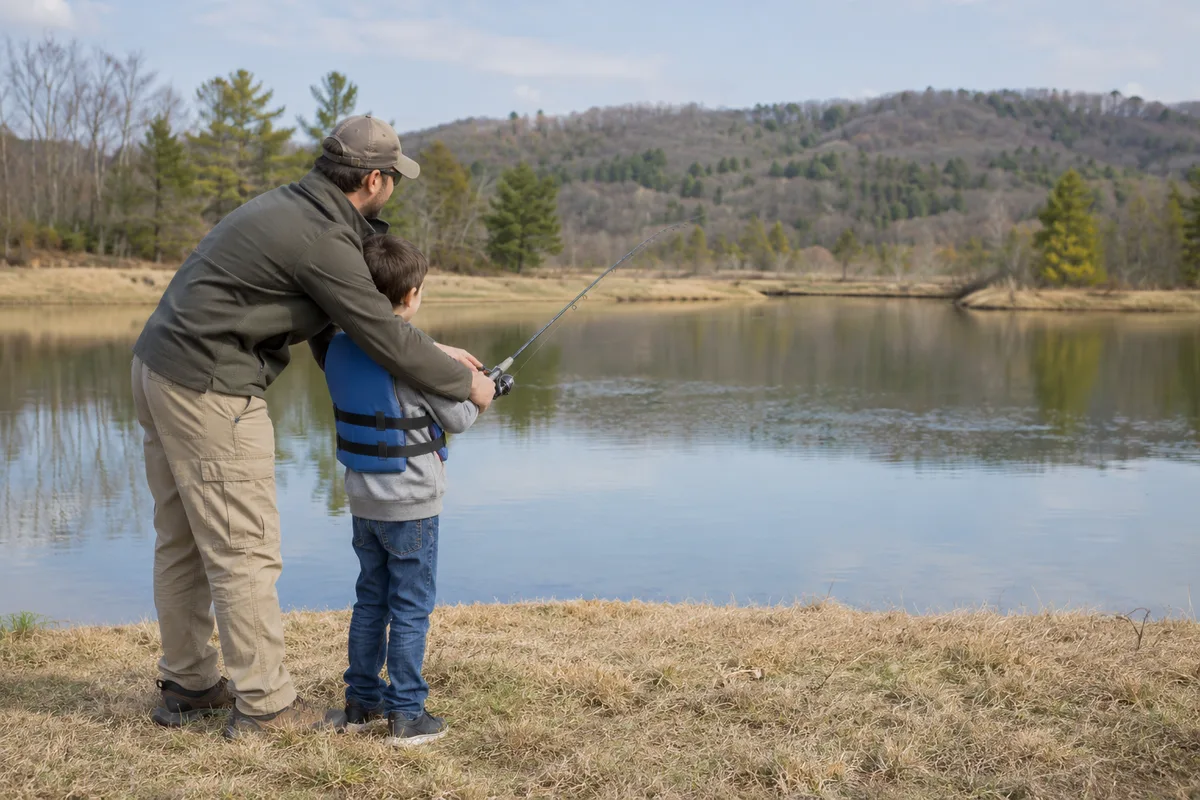
The CDC recommends properly fitted life jackets for children around natural water. Choose a U.S. Coast Guard-approved jacket appropriate for the child, fasten it correctly and check the manufacturer’s fit instructions. A life jacket does not replace supervision. Inflatable toys and arm bands are not substitutes for a life jacket.
Inspect the shoreline together before setting down gear. Mud, steep banks, deep drop-offs, cold water and changing weather can make a calm-looking pond hazardous. Pick a spot back from the edge, establish a clear boundary for children and move away if conditions are unsafe. If boating, check the equipment and life-jacket rules for that water and vessel.
Keep the equipment manageable
One simple rod and reel can be enough for a first outing. A small float, also called a bobber, a suitable hook and permitted bait are one possible setup when local rules allow them; a practice cast in an open area without a hook can help a new angler learn the motion. The U.S. Fish and Wildlife Service’s first-time guide describes a hook, weight and bobber as a basic setup and reminds anglers to check local bait rules. Some ponds restrict bait or hooks. See the stocked-trout beginner’s guide for a basic pond approach.
You do not have to buy every item for one visit. The Fish and Wildlife Service notes that some libraries, state agencies, hatcheries and wildlife refuges offer tackle loaner programs. Ask the local provider what is available, whether children need an adult to borrow equipment, and what else to bring.
An adult can handle knots, sharp hooks and hook removal for young children, then let them help in age-appropriate ways. Before casting, check the space behind and beside the angler and keep other people clear. Store unused hooks and tackle safely, and collect discarded fishing line.
Pack for the people and conditions rather than a long gear list:
- Properly fitted life jackets for children, plus weather-appropriate layers and sun protection.
- Drinking water, snacks, a first-aid kit and any needed medicines.
- A charged phone, the park’s contact information and a bag for litter.
- Pliers or a hook-removal tool and a suitable soft net if releasing fish.
- A cooler with ice only if keeping fish is legal and your family plans to do so.
Plan a short, flexible visit
Choose a convenient time and let the children’s attention and comfort guide the length of the trip. A picnic, a walk on an approved path or a break away from the water can be part of the outing. A fish is a bonus, not the only measure of a successful day.
If the pond is crowded, give other anglers room to cast and avoid crossing their lines. If the weather changes, a child is tired or the shoreline is not as expected, leave or use your backup plan. Our trip checklist has more on preparing for conditions and handling a catch.
Questions families often ask
Do children always fish without a license?
No single rule applies everywhere. Age exemptions, permits and special youth-water rules differ by jurisdiction. Check the official requirements for each angler and the exact pond.
Should we go on the stocking day?
You can plan around a reported or scheduled stocking, but dates can change and an agency may not publish an exact day. A recent report is useful information, not a guarantee of fish or a requirement to visit immediately.
Can an adult fish at a youth pond?
That depends on the pond’s current rules. Some waters restrict fishing to specified groups, while others have different family or event rules. Ask the managing agency if the listing does not explain what a supervising adult may do.
Before leaving home, reopen the official source, check access and the forecast, and share your plan with someone who is not on the trip. A comfortable, well-supervised first visit gives everyone more time to enjoy the pond.
Sources & further reading
- Oregon Department of Fish and Wildlife: Fishing opportunities for youth and disabled anglers ↗
- Centers for Disease Control and Prevention: Preventing drowning ↗
- CDC: Summer swim safety ↗
- CDC Yellow Book: Traveling safely with infants and children ↗
- U.S. Fish and Wildlife Service: A guide to fishing for the first time ↗
Agency information can change. Check the official page before travelling. Suggest a correction.