
Affiliate disclosure: We may earn a commission from links on this page. As an Amazon Associate I earn from qualifying purchases.
Compare prepared eggs with two chartreuse dough listings for stocked waters where bait is legal. These are listing-based comparisons, not claims of field testing or guaranteed results.
Stocked-trout baits to compare
| Product | Useful for | Check before buying |
|---|---|---|
| Berkley Power Eggs floating bait assortment | Floating prepared eggs | Confirm assortment and local bait rules |
| Berkley PowerBait Natural Glitter, chartreuse | Natural Glitter chartreuse dough | Test buoyancy with the actual hook |
| Berkley PowerBait Glitter trout dough, chartreuse | Glitter chartreuse dough | Verify the exact jar and variation |
Berkley Power Eggs floating bait assortment
Berkley Power Eggs floating bait assortment
Prepared egg-shaped floating bait in assorted colors. Check the selected package and the rules for your water.
Check PriceThis Power Eggs listing describes a floating assorted-color prepared bait. Compare its egg-shaped form with moldable dough for a permitted bait rig.
Check the selected package and test whether the assembled hook and bait float. Scented and prepared products can be prohibited in special-regulation waters.
Berkley PowerBait Natural Glitter, chartreuse
Berkley PowerBait Natural Glitter, chartreuse
Moldable floating trout dough. Test the assembled bait and hook in shallow water to make sure the rig floats.
Check PriceThe selected Natural Glitter listing is chartreuse trout dough. It can be molded around a small hook where prepared bait is allowed.
Test the rig in shallow water and adjust the amount of dough or hook size if it sinks. A color is a starting choice, not a promise of more fish.
Berkley PowerBait Glitter trout dough, chartreuse
Berkley PowerBait Glitter trout dough, chartreuse
Prepared glitter trout dough in a listed chartreuse variation. Verify the exact selection and whether bait is allowed.
Check PriceThis separate PowerBait Glitter listing identifies a chartreuse prepared dough. Compare the exact label and selected package with the Natural Glitter option above.
Both are prepared bait, so check local rules and storage directions. If you intend to release fish, pay attention to the line and use appropriate handling practices.
Choosing bait after a stocking
Hatchery-raised rainbow trout have been fed prepared pellets, but that does not guarantee they will prefer a particular bait after release. Fish may spread out, respond to natural forage or ignore a presentation. Give each position a reasonable trial and vary the depth before moving. Avoid crowding the stocking location or blocking access for other anglers.
Floating dough is easy to mold around a small hook, and prepared eggs offer a different form. A worm or small piece of crawler is another option where natural bait is legal. Salmon eggs may be allowed in some waters and restricted in others. Always follow local transport and disposal rules; never release unused bait or bait water into a different pond or stream.
How much bait should you use?
Use enough trout bait to cover or hold securely on the hook while leaving the point able to catch. A large ball of Power Bait can hide a small hook and make it harder for a small fish to take the bait. For a single prepared egg or salmon eggs, check the fit on the selected hook and replace damaged bait. If stocked trout nibble without taking it, a smaller piece and a clean hook point are sensible adjustments.
In a local lake, fish may use shallow or deeper areas as conditions change. Trout fishing from a bank often means adapting the rig to the water you can safely reach. Fish a manageable location first and move only where access is allowed. The best baits for trout are those that match the legal method and presentation, not a guaranteed color or scent.
A floating dough bottom rig
One common rig has a sliding sinker on the main line, a swivel, a leader and a small bait hook. The sinker rests on the bottom while the floating dough suspends above it. Mold a small amount around the hook, then test it in shallow water: the particular bait must lift the weight of the hook. Too much hook or additional tackle can prevent it from floating.
The leader length changes how high the bait sits above the sinker. In a pond with a clean bottom, begin with a manageable leader and adjust if the bait is hidden in weed or soft sediment. Cast gently, let the sinker settle, take up slack and watch for a bite. Check the knot and rig after a snag. Do not leave unattended rods where prohibited or where fish may swallow bait deeply.
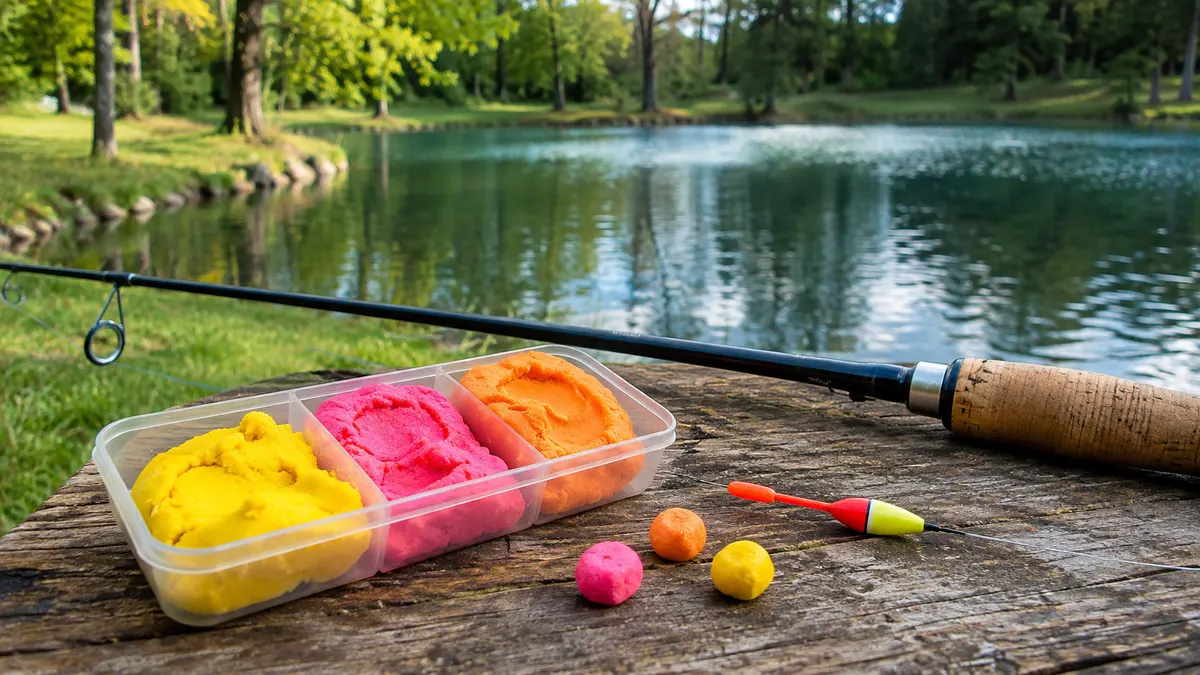
The chartreuse dough listings above are two prepared PowerBait examples. The Power Eggs assortment is another floating form. Check the selected color, size and package before ordering; there is no proof that one color catches more trout in every water.
Worms and eggs under a bobber
A bobber lets an angler suspend bait at an adjustable depth. Attach a float suited to the weight of the rig, add an appropriate small hook and use just enough permitted weight to present the bait. Start above vegetation and adjust if you see fish at a different depth. A small worm section may fit stocked trout better than a long piece that obscures the hook point.
In moving water, use only enough weight to carry the bait naturally and pay attention to the float. Current can pull a rig into cover or across another angler’s line. A spinning rod and reel rated for light tackle make small presentations easier to manage. Read our trout hook guide for sizing and hook-style considerations.
Another prepared form is Berkley Mice Tails, a soft bait shaped differently from dough or eggs. Check buoyancy and the local bait definition before rigging it. A night crawler is a natural worm; a small section can fit a small hook. Treble hook rules vary by pond.
Where and when to fish
Check the exact water on the agency report, the type of date provided and public access before leaving. A completed stocking record describes a release, not how many fish remain or whether fishing is currently allowed. Trout can disperse from a release point, so look for accessible depth changes, cover or current without trespassing.
Fish activity varies with water conditions and weather. If a bait receives no attention, adjust depth, change the amount of bait or try another legal location. An artificial spinner, spoon or small jig can help an angler cover water where lures are allowed. A minnow-shaped hard bait, such as a Rapala-style lure, provides a different presentation from stationary dough; choose the size and hook for the fishery.
An inline spinner or Kastmaster-style spoon covers lake water; a jig under a float can stay at a chosen depth. Brown trout and brook trout may also be stocked in some programs; confirm species in the agency report. A fly rod can present dry flies on the surface, a nymph underwater or a streamer suggesting a small fish. Hatchery pellet feeding does not reliably predict what every released fish will eat.
Troubleshooting a stocked trout rig
If floating trout bait sinks, remove excess weight or try a smaller hook, then test it again. If the bait floats but the line falls slack immediately, the sinker may not be on the bottom or a fish may be moving toward you. Watch the line without leaving the rod unattended. A treble hook can hold dough, but a single hook may be required and can be easier to remove; follow the exact water rules.
For bobber fishing, measure the distance between the float and hook, and lengthen or shorten it in small steps. Fish can hold above or below your first setting. If weeds foul the rig, move to clear water rather than dragging a hook through vegetation. In a stream, keep the bait drifting at the speed of the current and avoid adding more weight than needed.
Handle fish carefully
Bait fishing can lead to deep hooking. If you intend to release fish, pay close attention to the line and consider permitted artificial lures or flies. Use tackle that lets you land fish promptly, wet your hands and keep the fish in the water when practical. If a hook is deeply embedded, follow local agency guidance instead of pulling forcefully. Treble hook, barbless and bait restrictions vary by water.
Stocked trout bait questions
Is PowerBait always the best bait for stocked trout?
No. Prepared dough is a common option where allowed, but a worm, prepared egg or artificial lure may fit a different situation. Depth, location and current regulations matter as much as the label on a jar.
How long after stocking should I fish?
There is no universal waiting period. Check whether the agency announces a closure or opening time, and distinguish a scheduled date from a confirmed release. Give hatchery staff space and follow posted rules.
Can artificial lures replace bait for trout?
Yes. In-line spinners, a spoon or a jig can help locate fish that are spread through a pond. A small minnow-shaped jerk bait or crankbait is another option where its hooks are legal. Fish the lure at a controlled depth and use a spinning reel and line suitable for the lure weight. Check rules before adding scent or using plastic trout worms.
Can I use a fly for stocked trout?
Yes, where permitted. A dry fly, nymph or streamer can be presented with suitable tackle. Stocked trout, wild trout and other fish may feed on a range of aquatic insects and small fish; select a legal presentation for the water.
Find the official stocking source for your state and read the current regulations before your trip. Our broader trout bait guide compares bait and lures across different waters.
Sources & further reading
- Berkley: Power Eggs Floating Magnum assortment ↗
- Berkley: Natural Glitter trout bait ↗
- Oregon Department of Fish and Wildlife: trout fishing basics ↗
- National Park Service: How to safely catch and release ↗
Product details and fishing rules can change. Check the current listing and local regulations. Suggest a correction.