
Affiliate disclosure: We may earn a commission from links on this page. As an Amazon Associate I earn from qualifying purchases.
A useful pair of fishing pliers should reach the hooks you use, fit your hand and carry securely. Compare these tool sets and a dedicated pair using the listed features; we have not independently tested them.
Fishing pliers and tools to compare
| Product | Useful for | Check before buying |
|---|---|---|
| KastKing Cutthroat pliers and scissors set | Pliers plus separate scissors | Selected set contents and carrying method |
| KastKing SteelStream fishing tool set | Several fishing tools in one package | Which tools you need and local knife rules |
| FLISSA 8-inch fishing pliers | A dedicated pliers-and-sheath setup | Jaw size, lock and included accessories |
KastKing Cutthroat pliers and scissors set
KastKing Cutthroat pliers and scissors set
A listed 7.5-inch pliers and scissors set with line-cutting tools.
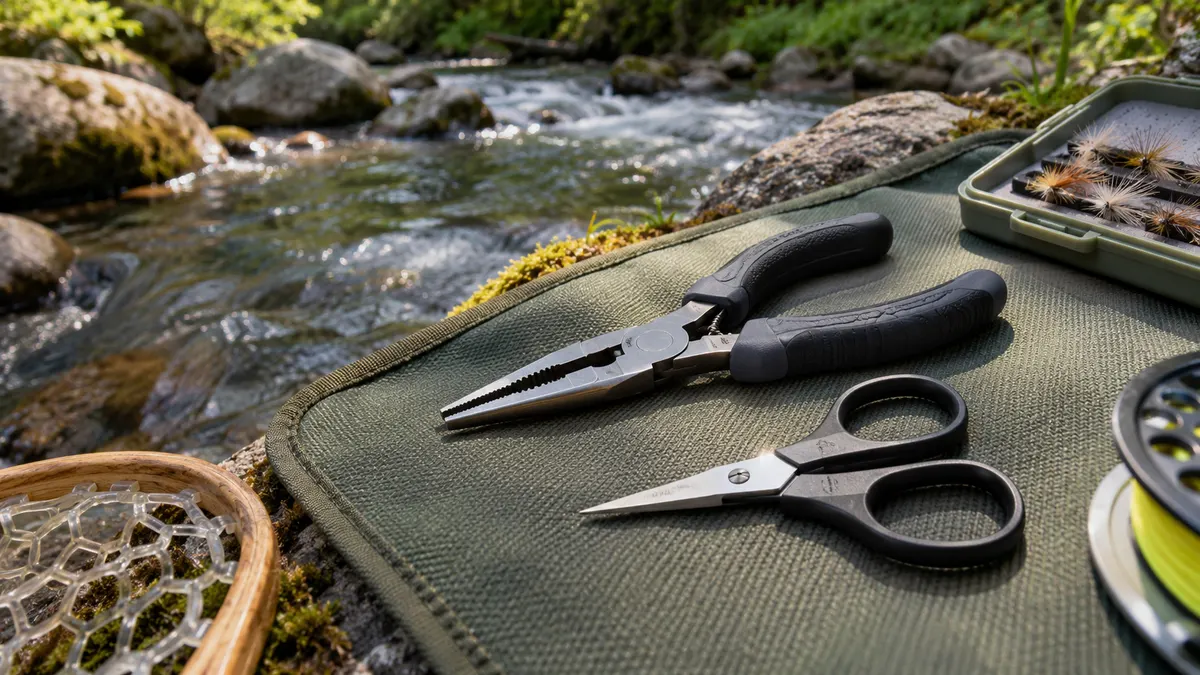
Check PriceThe selected KastKing Cutthroat listing describes 7.5-inch stainless-steel fishing pliers paired with braid scissors. Compare it if you want a separate cutting tool as well as pliers for hooks.
Verify the exact package and whether a sheath or lanyard is included. A longer jaw may help reach a hook, but it must still fit the small hooks and fish you expect.
KastKing SteelStream fishing tool set
KastKing SteelStream fishing tool set
A listed multi-tool set with pliers, scissors, a knife and a fish gripper.
Check PriceThe SteelStream listing describes fishing pliers, scissors, a fillet knife and a floating fish gripper. It is a comparison for someone who wants several tools rather than pliers alone.
A larger kit takes more room and includes sharp tools. Check the exact contents, local rules and how each item will be stored. A lip gripper should not replace careful support and handling of a fish.
FLISSA 8-inch fishing pliers
FLISSA 8-inch fishing pliers
A listed aluminum pliers design with line cutters, sheath and lanyard.
Check PriceThe selected FLISSA listing describes 8-inch aluminum pliers with a safety lock, titanium-alloy jaws, tungsten-carbide cutters, sheath and lanyard. Compare the stated features with the hooks and line you use.
An 8-inch tool can be convenient for reach but may be bulky for tiny trout hooks. Check the jaw profile, sheath fit and whether the cutter is suitable for your particular line.
Choose fishing pliers for removing hooks
Fishing pliers can help remove a hook, cut line and adjust tackle. For small trout, a narrow jaw that can reach a small single hook may be more useful than a large tool designed around heavy saltwater hooks. Compare the jaw shape and overall size with the fish and lures you expect.
Needle nose pliers offer reach, while some dedicated fishing pliers add a split-ring tip or line cutter. A split-ring feature is useful only if it fits the small rings on your lures. Avoid forcing a large tool into a small fish’s mouth; prepare the tool before landing the fish and follow local agency guidance for a deeply embedded hook.
Fishing line cutters for braid and mono
Monofilament, fluorocarbon and braided fishing line can behave differently in a cutter. Check the manufacturer’s description for the exact cutter and line type. Some anglers prefer separate braid scissors for fine braided line. Keep fingers away from sharp cutter edges, close the tool when stored and collect all discarded line.
Some pliers include a crimping area or split-ring tip. Test those features on the tackle you actually use rather than assuming every tool handles every ring or sleeve. A bent or damaged hook should be replaced, not repeatedly straightened and reused.
For small trout lures, compare the tip of the split ring pliers with the rings on your smallest spinner or spoon. A tip designed for a large ring can be awkward on fine tackle. If you mainly fish a single hook and do not change lure hardware, a narrow needle nose tool and a line cutter may be more useful than a specialized ring-opening feature.
Braided line can be difficult for some cutters to sever cleanly. Check whether the pliers list a cutter intended for braid, and compare that with separate braid scissors. Carbide cutters may be replaceable on some models, but do not assume replacement parts are included. The actual cutter position should let you trim line without placing fingers near the hook.
Stainless steel, aluminum and titanium fishing pliers
Listings describe pliers using stainless steel, aluminum, titanium or combinations of materials. A tool may have an aluminum body and different jaw or cutter materials, so read the full specification. Corrosion resistance is not immunity from rust or damage, particularly after saltwater use.
Rinse and dry tools according to the manufacturer, inspect moving parts and store them dry. Danco, Piscifun, KastKing and other makers offer different plier designs; compare the specific jaws, cutters and carrying hardware rather than assuming that one material or brand guarantees performance.
The FLISSA listing above specifies an aluminum body, titanium-alloy jaws and tungsten carbide cutters; those are separate components, not a claim that the entire tool is titanium. The KastKing Cutthroat listing describes stainless steel and a separate pair of braid scissors. Compare replacement cutters, service instructions and sheath compatibility where those details are available.
Fishing pliers for fly fishing and spinning: sheaths and lanyards
A sheath can protect the jaws and keep pliers accessible on a belt or pack. A lanyard can reduce the chance of losing a tool, but it should be routed so it does not catch on brush or create a wading hazard. Check whether those accessories are actually included in the selected package.
For fly fishing, check whether the fishing pliers or forceps you carry fit small fly hooks. For heavier saltwater fishing, larger jaws and corrosion-resistant construction may be useful, but those features can add bulk to a trout vest. Rinse freshwater and saltwater pliers as directed, then dry the hinge and cutter before storage.
Try the handle and lock with wet or cold hands if possible. A tool that opens easily, fits the hand and can be reached quickly is more useful than a large set buried in a backpack. Keep knives and scissors secured and away from children.
Before a fishing trip, check that the jaws close evenly and that the lock and lanyard work. Keep a pair of fishing pliers within reach before landing a fish. When fishing from a boat, secure the sheath so the tool cannot slide overboard; when wading, keep the lanyard short enough to avoid tangles.
How to remove a trout hook with pliers
Prepare the pliers before bringing the fish close. If you intend to release the fish, wet your hands, minimize handling and keep the fish in the water when practical. Support it gently and remove an accessible hook without squeezing the body or touching the gills. A suitable rubber landing net can help keep the fish supported.
Do not pull forcefully on a deeply embedded hook. For fish you intend or are required to release, the National Park Service advises leaving a hook that cannot be removed easily and cutting the fishing line as close to it as possible. Follow the rules and agency guidance for your water. If a hook is embedded in a person, seek appropriate medical care for a deep, complicated or sensitive-area injury rather than treating a fishing tool as medical equipment.
Fishing pliers questions
Do I need split-ring pliers for trout?
Only if you plan to change hooks or other hardware attached with split rings. Check that the tip fits your smallest rings. A small pair of needle nose pliers may be sufficient for accessible hook removal.
Can the same pliers cut braid and mono?
Some cutters are designed for both, but performance varies. Check the listing for the cutter type and keep separate braid scissors if needed. Inspect and maintain the cutter according to the manufacturer.
Are saltwater pliers suitable for freshwater?
They can be, if the size and jaws fit the task. A large saltwater tool may be awkward for small trout hooks; corrosion-resistant materials do not replace cleaning and drying.
Check the official source and fishing regulations for your state, including hook and release requirements for the exact water.
Sources & further reading
Product details and fishing rules can change. Check the current listing and local regulations. Suggest a correction.